

In most cases, no. A mediated settlement agreement in a Texas divorce or custody case becomes binding once the agreement is signed, if it meets three requirements in the Texas Family Code. It needs a prominent statement that it is not subject to revocation, the signature of each party, and the signature of each party’s attorney who is present. Once those boxes are checked, changing your mind the next morning is not a legal reason to undo it. The Supreme Court of Texas has also held that a judge can’t refuse to enter judgment on it just because the judge questions the deal.
That doesn’t mean there is never a way out. A few narrow exits exist. One is an agreement that doesn’t actually meet the statute. Another is a custody agreement that puts a child at risk in specific ways the law describes. Some appellate courts also allow relief when an agreement is illegal or was procured by fraud or duress. Here’s how each exit works, and what can still change after the judge signs your divorce decree.
Why a Texas mediated settlement agreement is so hard to undo
Texas law makes qualifying mediated settlement agreements binding on purpose. Family Code Section 6.602 covers divorce cases, and Section 153.0071 covers custody and other parent and child cases. Under both, a party to a compliant agreement is entitled to a judgment on it “notwithstanding Rule 11, Texas Rules of Civil Procedure, or another rule of law.”
Ordinarily, a Texas party who agrees to settle a case can withdraw consent before the court renders judgment, which leaves the other side to sue on the deal as a contract. The mediation statutes switch that off.
The contrast with other Texas divorce agreements is striking. Suppose the parties reach an agreement on property outside mediation under Section 7.006. That agreement may be revised or repudiated before the divorce is rendered, unless another rule makes it binding. An agreement from an informal settlement conference under Section 6.604 binds the court only if the judge finds its terms are just and right. A compliant MSA gets neither escape hatch. The protective review has to happen before you sign, not after.
| Type of agreement | Can a spouse back out before judgment? | Does the judge review it for fairness? |
|---|---|---|
| Mediated settlement agreement that meets Section 6.602 or 153.0071 | No, either party is entitled to judgment on it | No general fairness review; only the narrow child safety exception in Section 153.0071(e-1) |
| Informal settlement conference agreement (Section 6.604) | No, if it has the required statement and signatures | Yes, it binds the court only if the terms are just and right |
| Other written property agreement (Section 7.006) | Yes, it may be revised or repudiated before the divorce is rendered, unless it is binding under another rule of law | Yes, it binds the court only if the terms are just and right |
The Supreme Court of Texas confirmed this approach to alternative dispute resolution in In re Lee in 2013. A trial judge had refused to enter judgment on a parents’ MSA after deciding it wasn’t in the child’s best interest. The Court held that the statute “means what it says”: a trial court may not deny entry of judgment on a properly executed MSA on best interest grounds.
The opinion also cites earlier appellate decisions on the same point. In one of them, Alvarez v. Reiser, the court held that a judge still had to enter judgment even though one party had withdrawn consent.
When the agreement does not meet the statute
The binding effect depends on the agreement actually checking every box. The non-revocation statement may be absent, a party may not have signed, or an attorney who was present may not have signed. Those agreements don’t get the special protection of Sections 6.602 and 153.0071. Courts look closely at these formalities because they’re what make the agreement irrevocable.
A defective MSA isn’t automatically worthless, though. It may still be treated like an ordinary settlement agreement. A party can sometimes withdraw consent before the court renders judgment. The other side may still try to enforce the deal as a written contract under Section 154.071 of the Civil Practice and Remedies Code. That means pleading and proving a breach of contract claim, which is slower and less certain than a judgment on a compliant MSA. If you think the paperwork you signed is defective, raise it promptly, before the judge signs a decree based on it.
The child safety exceptions in custody agreements
Custody and other parent and child agreements have one statutory exception that divorce property terms don’t. Under Section 153.0071(e-1), a Texas court may decline to enter judgment on a mediated settlement agreement in a custody case only if it makes two separate findings:
- A party was a victim of family violence and that impaired the party’s ability to make decisions, or the agreement would let a registered sex offender (for an offense committed at 17 or older), or someone with a history or pattern of physical or sexual abuse, live with the child or have unsupervised access to the child.
- The agreement is not in the child’s best interest.
Both findings are required, which is why this exception is narrow. It’s about the child’s safety and a parent’s capacity to bargain, not about whether one side got the better deal. If family violence is part of your history, the better time to raise it is before mediation. Texas law lets a party file a written objection to mediation on family violence grounds (Sections 6.602(d) and 153.0071(f)). If the court still sends the case to mediation after a hearing, it must order safety measures, including separate rooms.
Fraud, duress and illegal terms
What if the agreement was signed under threats, or rests on a lie about the assets? Several Texas courts of appeals have recognized that an agreement may be set aside if it is illegal or was procured by fraud, duress, coercion, or other dishonest means. The Supreme Court noted those decisions in In re Lee but expressly left the question open.
So the answer can depend on your appellate district and on the strength of your proof.
Illegal terms are treated a little differently from the rest of the agreement. In a decision the Supreme Court cited in In re Lee, the Dallas Court of Appeals held that a judge can’t enter a judgment that varies from the MSA. The same court said a judge doesn’t have to enforce a provision that is illegal.
In practice, this exit is hard to use. “My spouse pressured me” or “I was exhausted after nine hours” usually isn’t enough. Courts look for real evidence, such as hidden accounts the other spouse swore didn’t exist, or threats that went beyond the ordinary pressure of a negotiation. A sworn inventory and full financial disclosure before mediation are what make a later fraud claim provable, which is one more reason to build the record early.
What can still change after the divorce decree is signed
Once a decree based on your agreement is signed, the question shifts from “can I undo the agreement” to “can I change the order.” The answer depends on which part of the order you mean. A request to set aside the judgment itself is tightly time-limited. A motion for new trial generally must be filed within 30 days after the judgment is signed.
The deadline to start a family law appeal is also short. After those windows, a bill of review is a separate suit with demanding proof requirements.
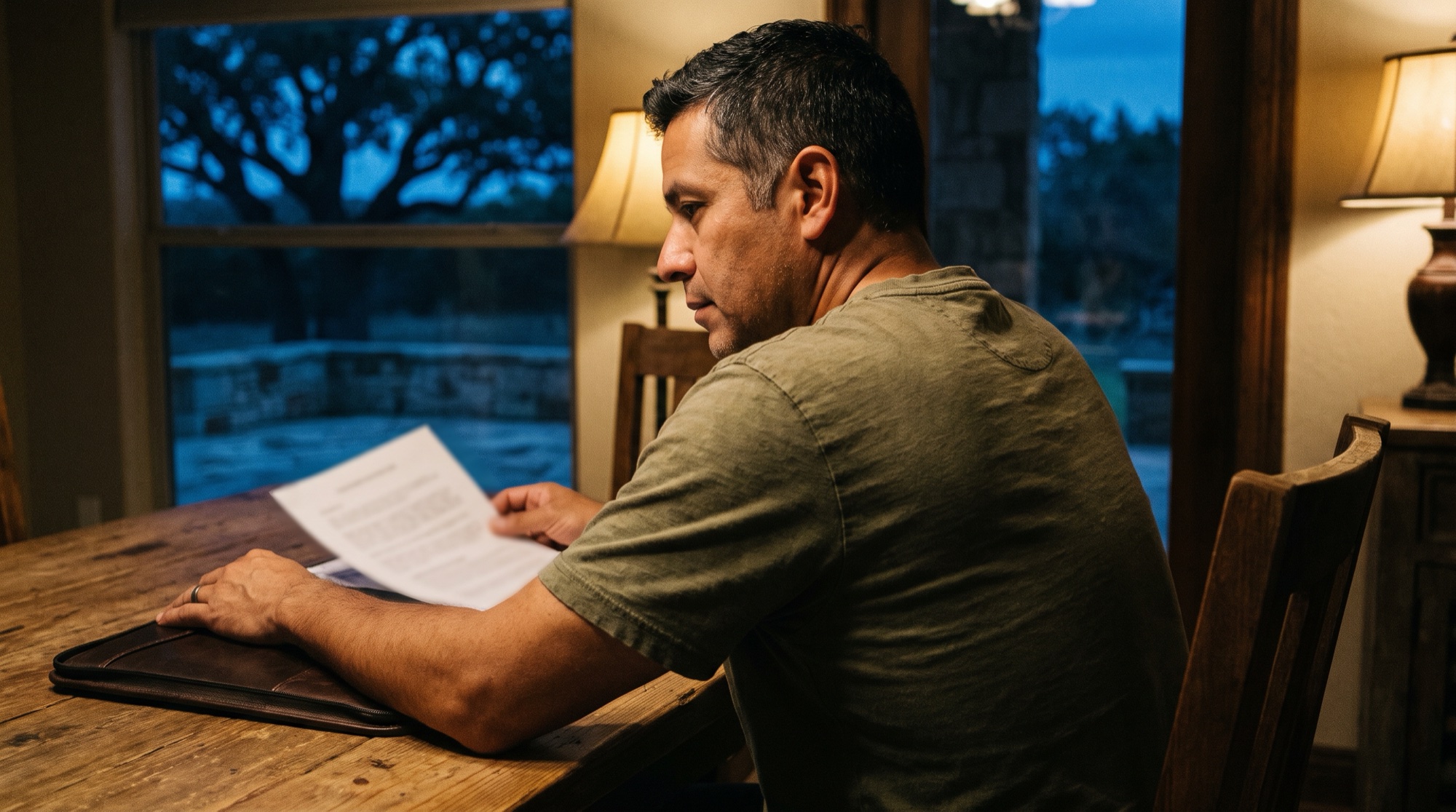
The property division is the most final part. Under Section 9.007, a court may not amend, modify, alter, or change the division of property in a divorce decree; it can only clarify or help carry it out. If you gave up the house or a retirement account at mediation, that choice is very likely permanent.
Custody, possession, and child support are different, because they stay modifiable as children and lives change. Under Sections 156.101 and 156.401, a parent can ask to modify custody or support after a material and substantial change in circumstances.
Here’s a detail many parents miss. When the order is based on a mediated agreement, that change is measured from the date the agreement was signed if that’s earlier than the order. Did you agree to child support that differs from the guidelines? Then Section 156.401(a-1) allows a change only on a material and substantial change. The three-year review that applies to guideline orders isn’t available.
What to check before you sign at mediation
Because the agreement is so hard to reverse, the work that protects you happens in the mediation room. Mediation still resolves many divorce cases well, and mediating early often lowers cost and conflict. The terms our attorneys most often see people want to revisit later are the vague ones. Before you sign, make sure the agreement answers these questions in plain words:
- Who keeps the house, who must refinance it, and by what date?
- How each retirement account is divided, and who prepares the order to divide it.
- Exact exchange times, holiday schedules, and travel rules for the children.
- Who pays which debts, and what happens if a payment is missed.
- How disputes over drafting the final decree, or other open issues, will be resolved.
Mediations run long, and fatigue is real. The mediator has to stay neutral, so the mediator can’t tell you whether a term is fair to you. It’s fine to ask for a break, ask your lawyer to walk through each page again, or decline to sign until a term is clear. A divorce mediation attorney who sits with you in your room can test each provision. Does it match what a judge would likely do, and how will it read once it becomes a court order?
That last step matters more than it seems. The decree has to match the MSA, so any ambiguity you sign is the ambiguity you live with. In Central Texas mediations across Travis, Hays, Bastrop, and Comal counties, we’d rather spend an extra hour on wording than see a client litigate what a sentence meant.
Talking with a lawyer about your agreement
If you’ve already signed and are having second thoughts, timing matters, so talk with a lawyer before the judge signs the decree if you can. If you haven’t mediated yet, preparation is the best protection you have. Our managing attorney, Tyler Key, and the family law attorneys at Key Law Office help clients prepare for and attend mediation from offices in Austin, Buda, Bastrop, New Braunfels, and Victoria. This article is general information, not legal advice for your situation. To talk through your options, request a consultation or call (512) 400-2350.
Frequently asked questions
Can a mediated divorce settlement be overturned in Texas?
Rarely. A mediated settlement agreement that meets Family Code 6.602 or 153.0071 is binding when signed, and a judge must enter judgment on it. Narrow exceptions include agreements that don’t meet the statute, certain child safety findings under 153.0071(e-1), and, in some courts, illegality, fraud, or duress.
Can I back out of a mediated settlement agreement before the judge signs it?
Not if the agreement meets the statute. Texas law entitles either party to a judgment on a compliant MSA notwithstanding Rule 11, so withdrawing consent before the decree is signed generally doesn’t stop it. An agreement missing a required element may be treated differently.
What if my spouse hid assets during mediation?
Some Texas appellate courts have allowed an MSA to be set aside when it was procured by fraud, though the Supreme Court of Texas has not decided the question. Proof matters, so sworn inventories and financial disclosures made before mediation are important. Talk with a lawyer quickly, because post-judgment deadlines are short.
Can a mediated custody agreement be changed later?
Yes. Custody, possession, and child support can be modified under Chapter 156 of the Family Code after a material and substantial change in circumstances. When the order is based on an MSA, the change is measured from the date the agreement was signed if that date is earlier than the order.
Does the judge have to approve a mediated settlement agreement?
The judge enters judgment on it, but does not review a compliant MSA for fairness the way it reviews some other agreements. In 2013 the Supreme Court of Texas held in In re Lee that a court may not refuse a properly executed MSA because it questions the child’s best interest.